UK Mandatory VAT E-Invoicing: What You Need to Know
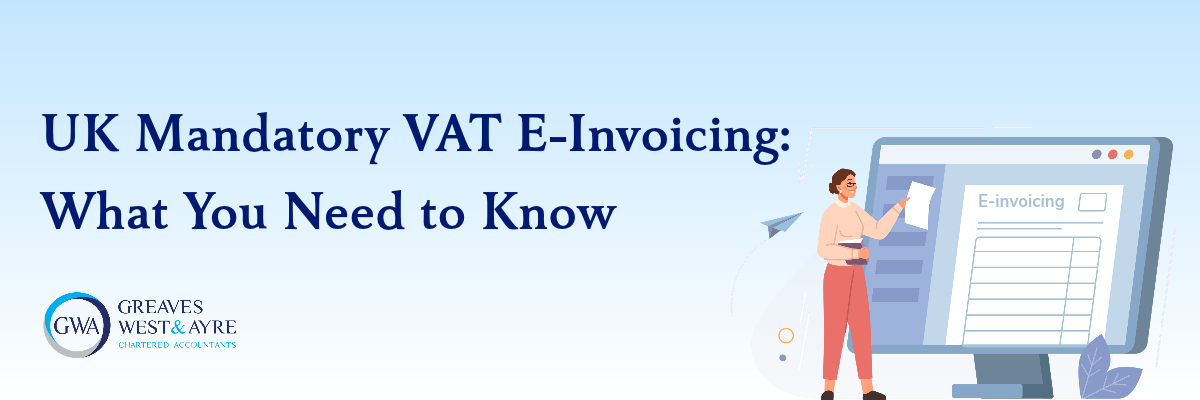
The UK government has confirmed that electronic invoicing (e-invoicing) will become mandatory for all VAT invoices from 2029.
While many of the detailed requirements are still being developed, we thought it would be helpful to provide a brief overview of what is changing, what businesses should expect, and the steps you may wish to start considering now.
What is e-invoicing?
E-invoicing is not simply emailing a PDF invoice.
Instead, invoice data is created and exchanged in a structured digital format that accounting systems can automatically read and process without manual data entry. This allows invoices to move directly between accounting systems, improving accuracy and efficiency.
What’s changing?
Currently, UK businesses can issue invoices in various formats, including paper and PDF. Under the new rules:
- Suppliers and customers will exchange invoice data electronically through compatible systems.
- Businesses are likely to require accounting or invoicing software capable of sending and receiving compliant e-invoices.
Why is the government introducing it?
The government expects e-invoicing to:
- Reduce manual processing and administrative costs.
- Improve cash flow and help businesses get paid faster.
- Reduce invoicing errors.
- Improve VAT compliance and reduce the tax gap.
- Help tackle late payments, particularly for SMEs.
Is this part of Making Tax Digital?
Not directly.
Making Tax Digital (MTD) focuses on keeping digital records and submitting VAT returns electronically. E-invoicing goes a step further by digitising the actual invoice exchange process between businesses. Many tax professionals see it as the next stage of the UK’s tax digitalisation programme.
Do businesses need to take action now?
The detailed scope, exemptions, technical standards, transmission arrangements and enforcement provisions have not yet been published. The Government has said that an implementation roadmap will be published at Budget 2026.
Whilst there is no immediate requirement, businesses should start preparing by:
- Reviewing current invoicing processes.
- Checking whether their accounting software provider supports e-invoicing.
- Identifying any manual invoice handling that could be automated.
- Ensuring that data is clean, accurate and well structured.
- Following government updates as technical standards and implementation guidance are published.